

Managing a business in states like California requires a deep understanding of how state-level entities govern your operations. If you are operating a corporation, LLC, or partnership, you have likely encountered the requirement for franchise tax BO payments. These payments are essentially the cost of doing business within a specific jurisdiction, but for many owners, they represent a significant hurdle to maintaining steady cash flow. When you are trying to balance payroll, inventory, and growth, an unexpected or misunderstood tax liability can throw your entire financial forecast out of balance. Achieving financial clarity means moving beyond simply paying the bills; it means understanding the timing and impact of every dollar that leaves your account.

What Are Franchise Tax Board Tax Payments?
To manage your finances effectively, you must first understand the authority behind them. A franchise tax board tax payment is a mandatory tax paid by businesses for the right to exist as a legal entity and operate within a state. Unlike federal income tax, which is strictly based on your net profit, franchise taxes often have a minimum requirement. Even if your business doesn’t turn a profit in its first year, you may still be on the hook for a flat fee.
This is where many entrepreneurs get caught off guard. You might be focused on your federal obligations, only to realize that the state requires a significant payment regardless of your performance. Working with a dedicated franchise bookkeeper can help you track these deadlines so they never come as a surprise. They understand that these payments are not just line items; they are legal requirements that keep your business in “Good Standing.”
The Direct Impact On Your Cash Flow
Cash flow is the lifeblood of your business. It is the difference between having the funds to seize a new opportunity and struggling to meet your basic obligations. Because franchise tax BO payments are often due in fixed installments or as a lump sum at the beginning of the year, they can create a “cash crunch.” If you haven’t set aside reserves specifically for these state obligations, you may find yourself dipping into your operating capital or personal savings to cover the cost.
To avoid this, you should treat these taxes as a monthly recurring expense in your budget, even if the payment only happens once or twice a year. Using a tool like a Profit Margin Calculator can help you see how these taxes eat into your bottom line. When you account for state taxes as a fixed cost of your business structure, you gain a more realistic view of your true take-home pay.
Unit-Level Reporting And Tax Allocation
If you are a multi-unit owner, the complexity increases. You aren’t just making one franchise tax board tax payment; you are likely managing liabilities for multiple entities or locations. If you don’t have unit-level reporting, it is impossible to know which location is actually generating the most tax liability and which is dragging down your total cash reserves.
By implementing professional franchise bookkeeping services, you can allocate tax costs to each specific unit. This gives you the freedom from tax/finance stress because you know exactly where the money is coming from and where it is going. You can then make strategic decisions about which locations are worth the tax burden and which might need a change in structure to remain profitable.
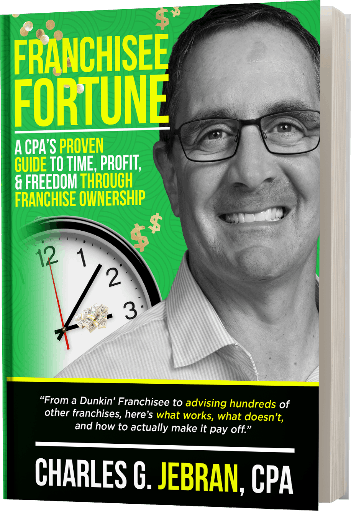
Franchisee Fortune:
A Book for Franchise Owners Who Want Profit, Clarity, and Control
Why Business Structuring Matters For Tax Savings
The way you originally set up your business, whether as an S-Corp, C-Corp, or LLC, has a massive impact on your franchise tax BO payments. For example, some states charge a flat fee for LLCs, while corporations might pay based on their net income or the value of their shares. As your business grows, a structure that worked when you had one employee might become a financial burden when you scale to 50 employees.
This is why Tax Planning & Business Structuring is not a “one and done” task. You should regularly review your entity type with a professional to ensure you aren’t overpaying. A peer-reviewed firm with 90 years of experience can look at your current setup and determine if a change in structure could save you thousands in annual franchise fees. If you feel like your current structure is holding you back, it is time to Book A Call to discuss your options.
What Changes When You Start Operating in Multiple States
If you are expanding across state lines, you are entering a world of nexus. Nexus is a legal term that determines if your business has enough of a connection to a state to be subject to its taxes. If you have employees in New Jersey but a warehouse in California, you might be liable for a franchise tax board tax payment in both states.
Managing these different rules is a heavy lift for any owner. You need a partner who understands the nuances of the US tax code and the specific quirks of state-level filings. Utilizing bookkeeping and tax services that specialize in multi-state operations ensures that you stay compliant without paying more than your fair share. It also prevents the “Estimated Quarterly Tax” surprises that often haunt business owners who try to handle state filings on their own.
Why Missing Tax Deadlines Is Usually a Systems Problem
In today’s digital world, missing a tax deadline is an avoidable mistake. However, when you are busy managing a team of 11 to 50 people, paperwork can slip through the cracks. To stay on top of your franchise tax BO payments, you need a modern financial stack. Tools like QuickBooks Online (QBO) and Fathom allow you to see your tax liabilities in real-time.
When your bookkeeping is automated, your franchise bookkeeping services can set up alerts for upcoming state deadlines. This allows you to plan your cash flow weeks or months in advance. Instead of reacting to a tax notice, you are proactively managing your bank account. If you aren’t sure if your current technology is up to the task, it might be time for a “Historical Clean-Up or Catch-Up” to get your records in order.
Moving From Compliance To Strategic Advisory
There is a big difference between a bookkeeper who just records your franchise tax board tax payment and an advisor who helps you minimize it. This is the shift from standard compliance to CFO & Advisory Services. An advisor looks at your total financial picture: your labor costs, your COGS, and your tax liabilities.
They can help you answer the big questions. Should you buy a new piece of equipment this year to reduce your taxable income? Is it time to sell a specific unit? By looking at your profitability pulse, an advisor helps you make decisions that protect your cash flow over the long term. You can even check out the Industries section of our site to see how we tailor these strategies to your specific niche.
Managing the “Middle Market” Tax Burden
As your revenue climbs between $100k to $500k and beyond, the IRS and state tax boards take a much closer look at your filings. At this stage, your franchise tax BO payments are no longer a small fee; they are a major operational cost. This is often the time when owners realize they need more than just a tax preparer; they need a full-service bookkeeping firm.
When you have a team of 22 professionals backing you up, you gain a level of security that a solo practitioner can’t provide. You know that your Bookkeeping and Tax Services are being handled by experts who understand the “90 years of experience” brand of quality. This is especially important for those looking for Transaction Advisory Services to eventually exit their business.
How To Prepare For Year-End State Taxes
The end of the year is a stressful time for any business owner, but it doesn’t have to be. To handle your final franchise tax board tax payment with confidence, you need a system. Start by reviewing your Year End Bookkeeping Checklist to ensure all your expenses are captured.
If your records are clean, your tax preparer can find deductions that a messy set of books would hide. For example, are you accurately tracking your Cost of Goods Sold? Using a Cost of Goods Sold (COGS) Calculator can ensure your inventory levels are reflected correctly, which in turn affects your taxable income. The more accurate your books, the lower your stress when the state comes calling for its share.
The Importance Of A Peer-Reviewed Firm
When it comes to state taxes, the stakes are high. Penalties and interest for late or incorrect franchise tax BO payments can add up quickly. This is why you should work with a “Peer-Reviewed Firm.” This means our work is regularly checked by other CPAs to ensure it meets the highest professional standards. It is an extra layer of protection for you and your business.
Whether you are looking for a CVA (Certified Valuation Analyst) for a business valuation or just need help with your Monthly Bookkeeping Checklist, quality matters. You want the peace of mind that comes from knowing your tax strategy was built by people who have literally written the book on it, like Charlie Jebran’s Franchisee Fortune.
Taking Control Of Your Tax Obligations
State taxes like the franchise tax don’t have to be a mystery. By understanding how franchise tax board tax payment requirements affect your cash flow, you can build a more resilient business. It starts with clean data, a standardized COA Accounting structure, and a proactive mindset.
Don’t wait until you receive a notice in the mail to think about your state tax strategy. By integrating your franchise tax BO payments into your overall business plan, you ensure that your growth is sustainable and your cash flow is protected. If you are ready to stop guessing and start growing, Contact Us today for a detailed review of your business financials.
FAQs
Do I have to make franchise tax BO payments if my business didn’t make a profit?
In many states, yes. Certain jurisdictions require a minimum franchise tax board tax payment just for the privilege of doing business in the state. This is why it is vital to understand the “Cash Basis vs Accrual Basis” of your accounting, as it affects how you report your income. You can learn more about this in our blog: Cash Basis vs Accrual Basis: Which Accounting Method Fits Your Business?.
How can a bookkeeping service for franchises help with these payments?
A specialized service ensures that you are accruing for these taxes throughout the year. Instead of a large, unexpected bill, you have a planned expense. For a better understanding of how to set this up, read our guide on What Is A COA And Why It’s Essential For Smarter Business Accounting.
What happens if I miss a franchise tax deadline?
Missing a deadline can lead to hefty penalties, interest, and even the suspension of your business’s legal status. Staying organized with a professional bookkeeping service for franchises is the best way to prevent this.
Can better margin analysis help me pay for these taxes?
Absolutely. By understanding your true margins, you can find the “extra” cash needed to cover state taxes without hurting your operations. Check out our Margin Analysis Tips to see how you can improve your bottom line.
Does local expertise matter for state franchise taxes?
Yes. Tax laws vary wildly by state. Working with a firm that understands the local landscape is essential for multi-unit owners expanding into new territories. Read more in Local Bookkeeping Services: Why Local Expertise Still Matters In A Digital World.
How do I perform a profitability analysis that includes my tax burden?
A true Profitability Analysis must include all taxes, including franchise fees. This ensures you know your “Net Profit” after everyone, including the state, has been paid.
How do franchise bookkeeping and accounting services help manage franchise tax BO payments?
Managing franchise tax BO payments effectively starts with having accurate, up-to-date financial data. Without clean books, it becomes difficult to plan for large state tax obligations or understand how they impact your cash flow.
Franchise bookkeeping services help ensure your data is organized and your tax liabilities are tracked throughout the year, while franchise accounting services provide deeper insights into how those payments affect profitability and growth decisions.
If you want to understand how this works across multiple locations, you can read more here: franchise bookkeeping services for multi-unit owners. And for a broader look at how financial strategy ties into common mistakes owners make, see franchise accounting services and the biggest financial mistakes franchise owners make.